Ylang-Ylang/Ilang-Ilang
Ilang-Ilang is probably the most fragrant flower on earth. It’s the secret ingredient in most signature perfumes especially Chanel, I learned.
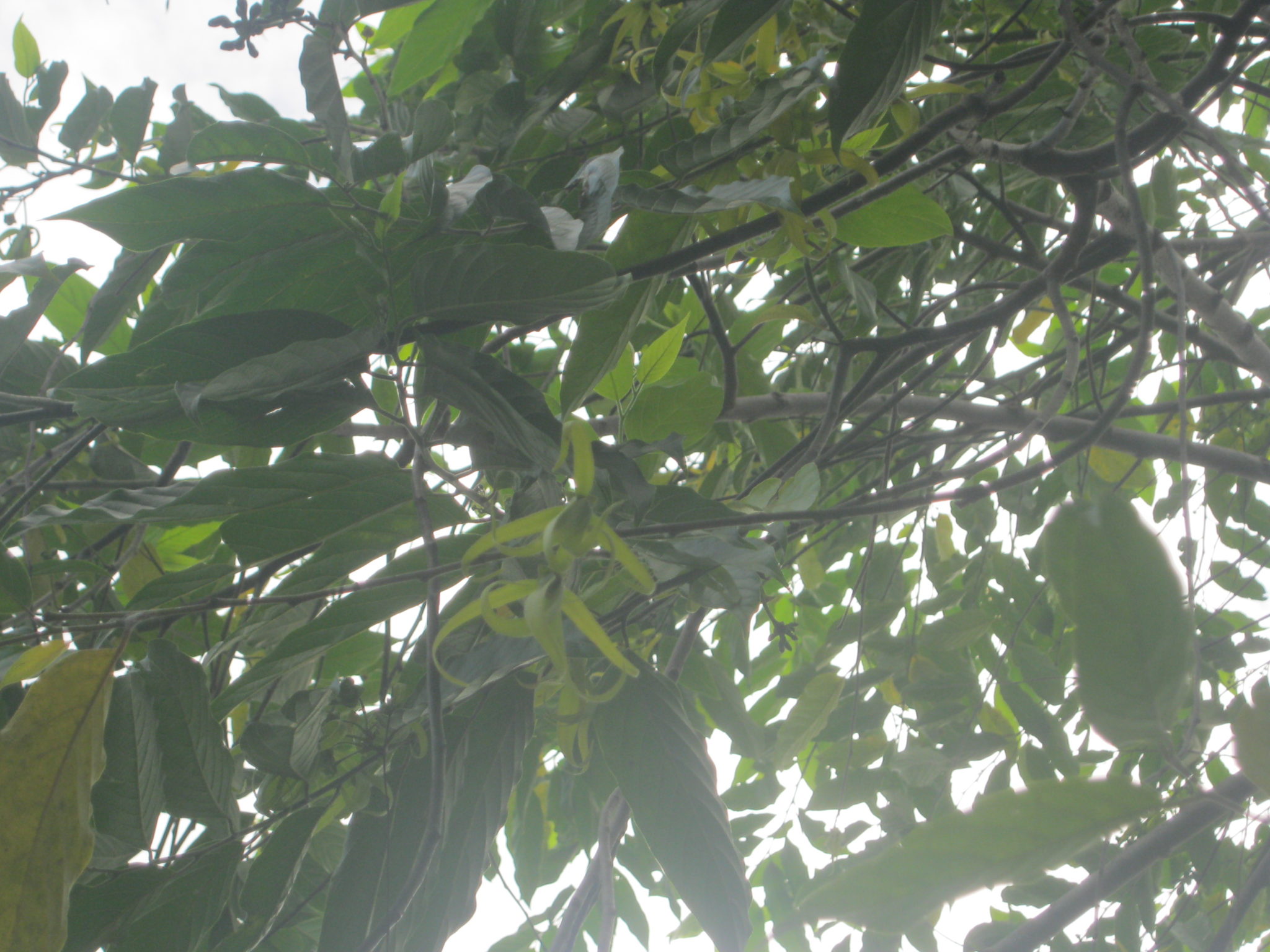
Ilang-Ilang or Cananga odorata is a tropical tree indigenous to the Philippines. It grows tall to about 40 ft. in height. In the forests where they grow well is acidic in nature so they will thrive in a soil with more acidity. The leaves are evergreen and glossy. The flowers are drooping and have six greenish-yellow petals which contains the oil that is so fragrant and thus being used in perfumery business. The tree in the picture which I took at my cousin’s backyard in my hometown in the Philippines is not a clear picture but you get the idea how tall the tree can be. It also have fruits that forms in berry-like clusters and are valuable source of food for birds like pigeons and doves.
Ilang-ilang must have come from the word “ilang” a Tagalog word which means wild because of its habitat in the forest, or rare because of its delicate scent found nowhere else.
It belongs to the same family of custard apple or cherimoya and atis. You will also notice that the flowers of atis or cherimoya have almost the same color, greenish yellow and the shape of the drooping flowers open up just like the ilang ilang except the petals are more rounded than elongated.
The oils derived from the ilang-ilang flowers are popular now in aromatherapy as a healing oil, believe to reduce high blood pressure, and for skin problems, and also considered to be an aphrodisiac. In the Philippines though, the common practice is to normally strung the “sampaguita” flowers (Hawaiian name is Pikake) to make leis, the ilang-ilang are used as pendants for these delicate flowers and are used as offerings to the patrons Saints in Catholic religion (you will observe that sampaguita vendors are everywhere outside the Catholic churches). It is also used for special occasions such as birthdays, graduations and weddings. I remember putting some of the flowers under my pillow at night to have a good night sleep.