Pumpkin Seedlings plus
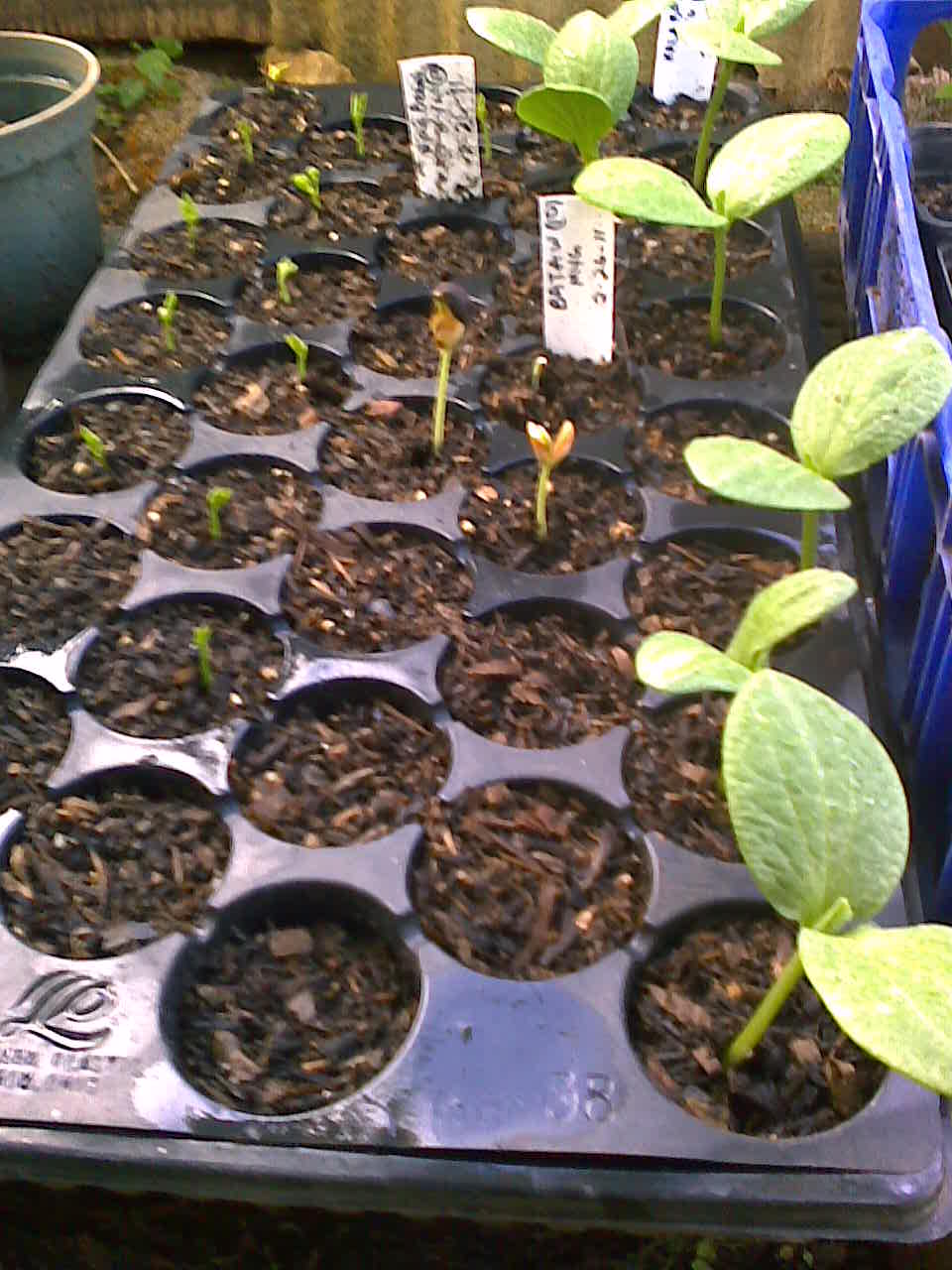
I sowed seeds of pumpkins (kalabasa) along with winged beans (sigarilyas) and hyacinth beans (bataw) about a week and this is how they look like. The larger leaf is the pumpkin, the ones on the left is hyacinth beans, and the farthest left are the winged beans.

Similar Posts

  • Amaranth/Kulitis

    Amaranth – Kulitis ( Amaranthus) is considered a very nutritious leaf vegetable in the Philippines.  The flowers are also edible and when the seeds are formed, the seeds are ground to make a healthy type of flour or eaten like a breakfast cereal.  The seeds of the amaranth is a good source of protein.  The…

  • Togi/Wild root starch

    Togi is a root vegetable that most Filipinos eat as a form of starch much like eating taro or sweet potato. Believe it or not I could not find any reference for this tuber called “togi” in the Philippines even in the Wikipedia so I will not have an English name for it. Anyway, it…

  • Baguio Beans

    We call these delectable green vegetable Baguio beans because they are mostly grown in the Mountain Province where the temperature is cooler than the lowlands in the Philippines and Baguio City is the most popular destination during the hot summer months.

  • Corn/Mais

    My garden neighbor planted some corn in his garden and he had some leftover seeds. He was nice enough to offer if I want them. I gladly accepted right away and plant them. He said he got the seeds from Japan when he was there. I figure it would be nice if I can have…

  • Winged beans/Sigarillas

    Winged beans or sigarilyas in the Philippines is also known as Goa beans, Mauritius beans, asparagus pea and many other names. I only know this beans as sigarilyas in my hometown. It is a tropical legume native to New Guinea. It grows as a vine 3-4 m. in height. It is a perennial but can…

  • Caribbean Hot Peppers

    Caribbean hot peppers also known as Scotch Bonnet (because of their shape) is found mainly in the Caribbean Islands but widely used in West African dishes.  The peppers are scaled at 445,000 Scoville units and a cousin of habanero peppers. Its name was derived from the city of Cuba called La Habana, or Havana in…