|

Jackfruit

20131109_093352

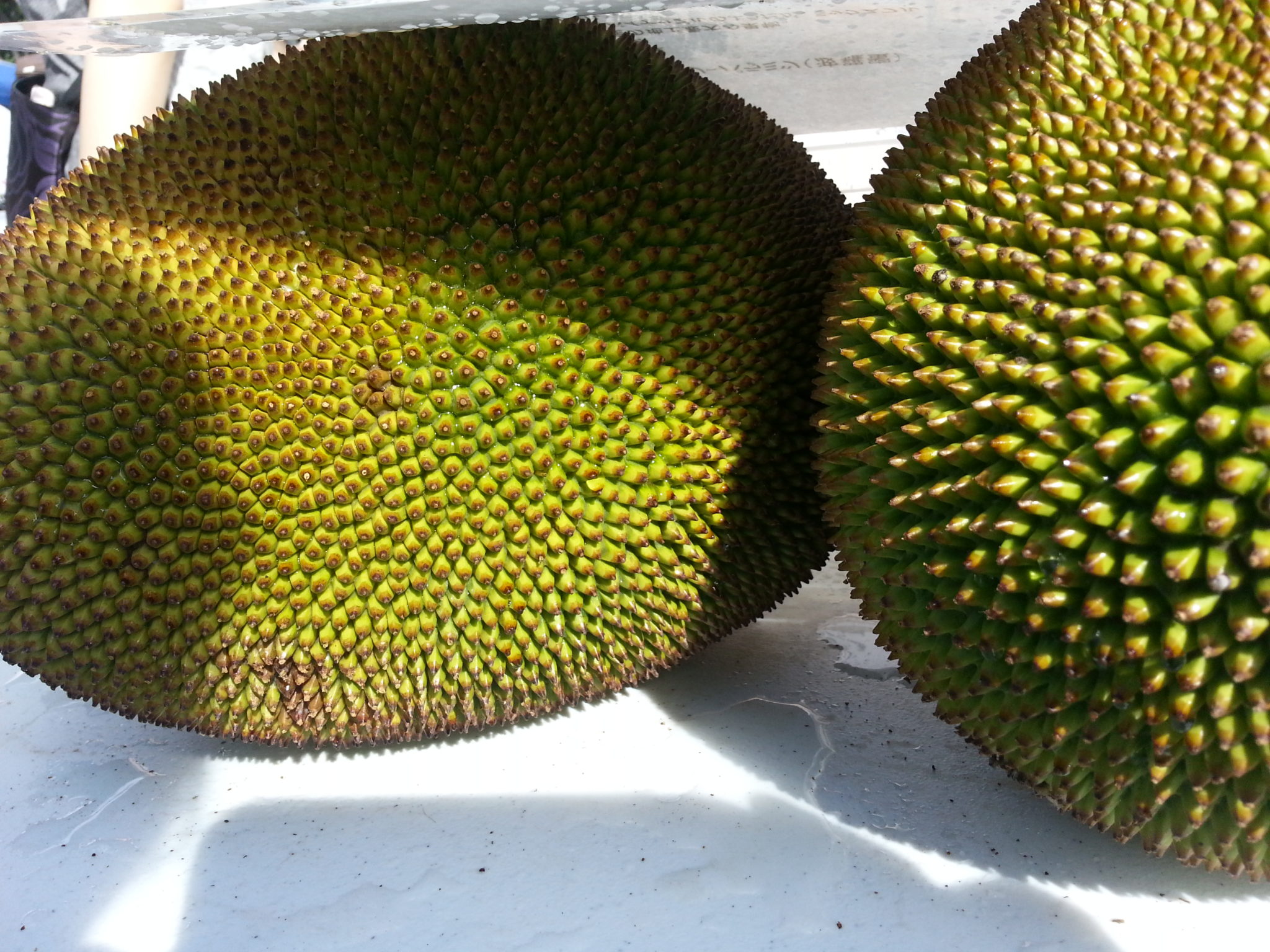
We call the jackfruit “langka” in the Philippines.  I consider it as the biggest fruit ever.  When I was young, we  nicknamed it “hog” because sometimes it grows as big as a pig.   I remember my grandma’s jackfruit tree in the farm and the fruit almost touches the ground.  I also remember eating the fruits when it is still pencil size. (We eat everything when I was a kid.)  The flesh of the fruit is golden yellow in color and is segmented.  Each segment has a seed inside and is also edible.  We boil the seeds and eat them like nuts.  There is a thin skin which you need to remove before eating the seeds.  The fruit has a wonderful aroma when it is ripe so you know when it is ready for picking.

I did not know the health benefits of  jackfruit back then.  I just eat the fruit like crazy because it is sweet and delicious.  It is normally used for making desserts like ice cream, halo-halo, guinatan with mochi balls, and the list goes on.  If you can not find fresh jackfruit in your area, it is available in groceries as preserved.  We also used it as a vegetable when it still immature.  The usual recipe for it is cooked in coconut milk with lots of spices.


Jackfruit has Vitamin C which is good for your immune system to protect against common infections like  colds, coughs and fever.  It also have complex carbohydrates which provides energy with its simple sugar content without cholesterol.  It has anti oxidants, phyto-nutrients and flavonoids for fighting cancer.  The high amounts of anti-oxidants from jackfruit neutralizes the free radicals  and acts as a shield to protect your DNA.  It also has potassium for maintaining blood pressure.  It  has a high fiber content for colon health  and aids in digestion.  It also contains Vitamin A for vision and helps to avoid having macular degeneration and cataracts.


Similar Posts

  • Calamansi/Calamondin

    Calamansi or calamondin – (citrofortunella) is our lemon counterpart  in the Philippines. It is a fruit but is more widely use as a condiment.  It is a good accompaniment for pancit or rice noodles, rice porridge or arroz caldo and also can be juiced for a refreshing drink.  It is sometimes used in “sinigang” or…

  • Caribbean Hot Peppers

    Caribbean hot peppers also known as Scotch Bonnet (because of their shape) is found mainly in the Caribbean Islands but widely used in West African dishes.  The peppers are scaled at 445,000 Scoville units and a cousin of habanero peppers. Its name was derived from the city of Cuba called La Habana, or Havana in…

  • Oakleaf Lettuce

    I have been experimenting on the types of lettuce that will grow well in my garden. So far I’m successful. Like this red oakleaf lettuce I planted a month ago. They are so good, crunchy and sweet. I like the red color in combination with the green leaves of the Manoa lettuce in my salad…

  • Mangoes from my hometown

    I was born in Iba, Zambales, Philippines and during the summer time when I was growing up, we always enjoy eating mangoes coming from my grandparents farm. They have quite a number of mango trees and different varieties too. We have the big one we call “dinamulag” which literally means ‘like carabao’ because it is…

  • Pumpkin/Kalabasa

    This is the pumpkin now after I helped it to be pollinated (notice I have also long beans in the same trellis). Two weeks after I hand-pollinated the female pumpkin flower, it has grown and almost ready to be picked. That’s one of the things that keep me going when it comes to gardening. Patience…

  • Durian

    Durian is a fruit native to Malaysia and Indonesia and is famous for its distinct odor. Some can’t stand the smell they would not even try to eat it but for those who don’t mind the strong odor is in for a great treat because it tastes really good like eating a custard with almond…