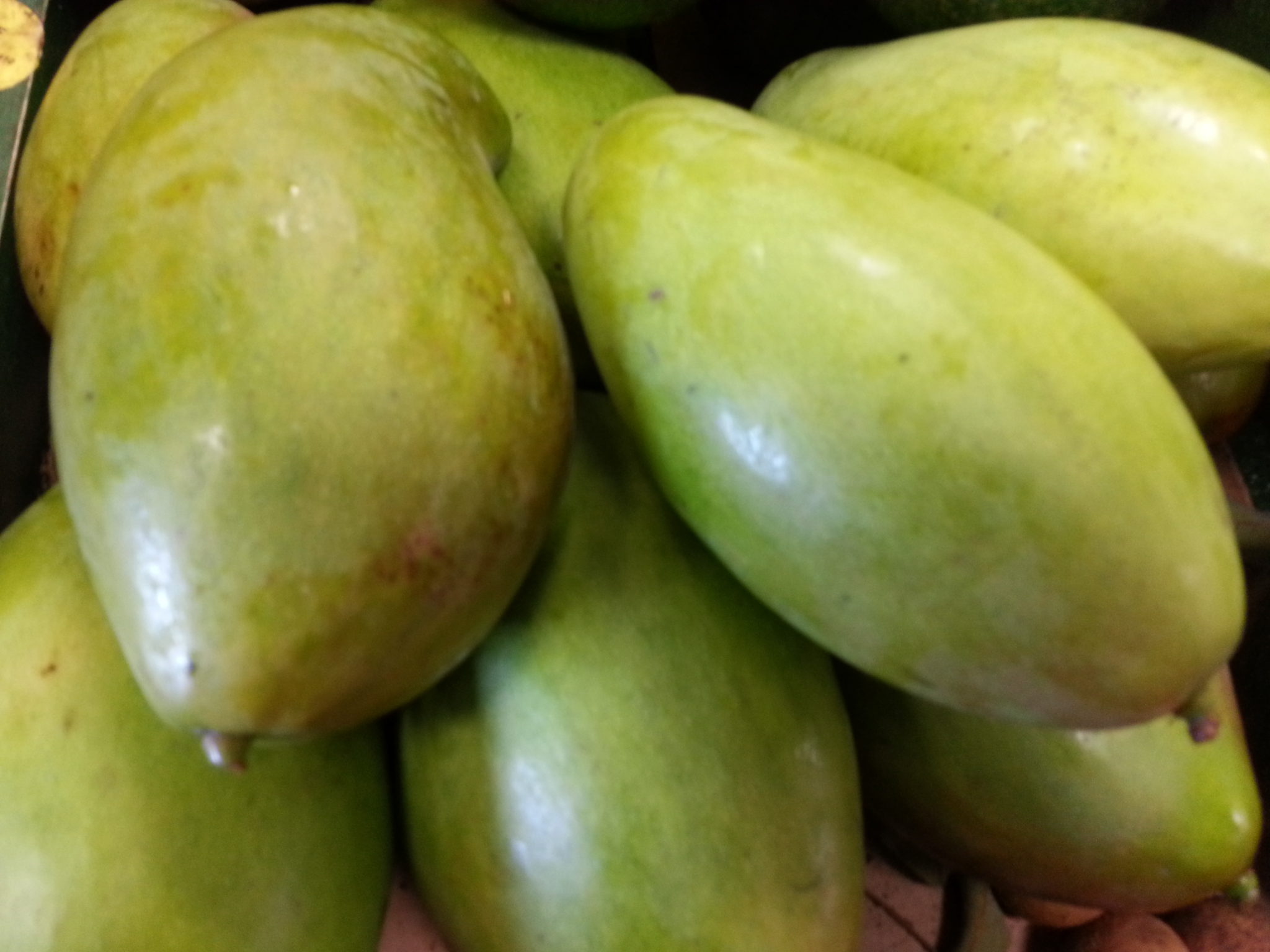
Green Mango/Mangga

20140331_092044

Mango is the national fruit of the Philippines one of the reasons why we eat this fruit green or ripe. Being green makes it as a condiment like a souring agent for our dish we call “sinigang” or sour soup. We also eat the green mango plain or dip in “bagoong alamang” (shrimp paste) or fish sauce and salt. Sometimes we make it into a salad, using only diced green mango, tomatoes and shallots-like onions we call ‘sibuyas Iloko” or “sibuyas Tagalog”. Green mangoes are also made into pickles. In India they make it into chutneys. Nowadays though, green mangoes are being made into juice like a a smoothie.

Green mangoes always reminded me of my childhood. We always pick up green mangoes that have fallen in the ground as the wind blows hard during the spring season in the Philippines. In the farm you can feel that chill brought about by the Siberian melting snow and that’s what I call springtime in my hometown. It’s the time where the mangoes are vulnerable to losing fruits because of the strong winds and also getting molds or mildew. But as soon as the heat of the sun picks up, mango trees happily give a bountiful harvest that we enjoy all summer long.

Similar Posts

  • Coconuts

    Coconuts when eaten fresh and young is considered as a refreshment when I was growing up in the Philippines. We drink the water inside the coconut and then by cutting the coconut in half, the white flesh will be revealed and that’s very good to eat indeed. The mature ones are utilized as a culinary…

  • Guava

    Guava (Psidium Guajava) is a tropical fruit native to Mexico, Central America and the northern part of South America and is called guayaba, a Spanish word which the Filipinos used and became “bayabas” in the native dialect. The tree can be grown from seeds, and will start fruiting within 2-4 years. It will produce fruits…

  • Macopa/Mountain Apple

    Macopa or Mountain Apples are in season now in Hawaii and they look delicious. Their red color make them almost look like red delicious apples. They are crunchy and succulent and although not too sweet, they are refreshing to eat. Each fruit have a seed inside which you can discard because they are not edible.

  • Mangoes

    Mango season just ended, at least in our tree. We have Pirie mango and Hayden. The mangoes in the picture are Hayden. I have a good time picking the mangoes in the backyard. This year I was able to make lots of mango jam. As soon as the last mango was picked though, the trees…

  • Atemoya/Cherimoya

    Atemoya is a hybrid of two types of annona fruits which are sugar apple and the cherimoya.  The sugar apple is what we refer to in the Philippines as “atis” the word I believe came from the old Mexican word “Ate” which refers to sugar apple.  The crossing of these two types of  Annona fruits…

  • Coconuts/Niyog

    Coconut is the most versatile of all plants that I ever knew. From the fruits, to the leaves, to the trunk almost all parts of it can be used for something. The leaves we used for wrapping a delicacy we call “suman” (glutinous rice wrapped in coconut leaves). The inner part of the leaves is…