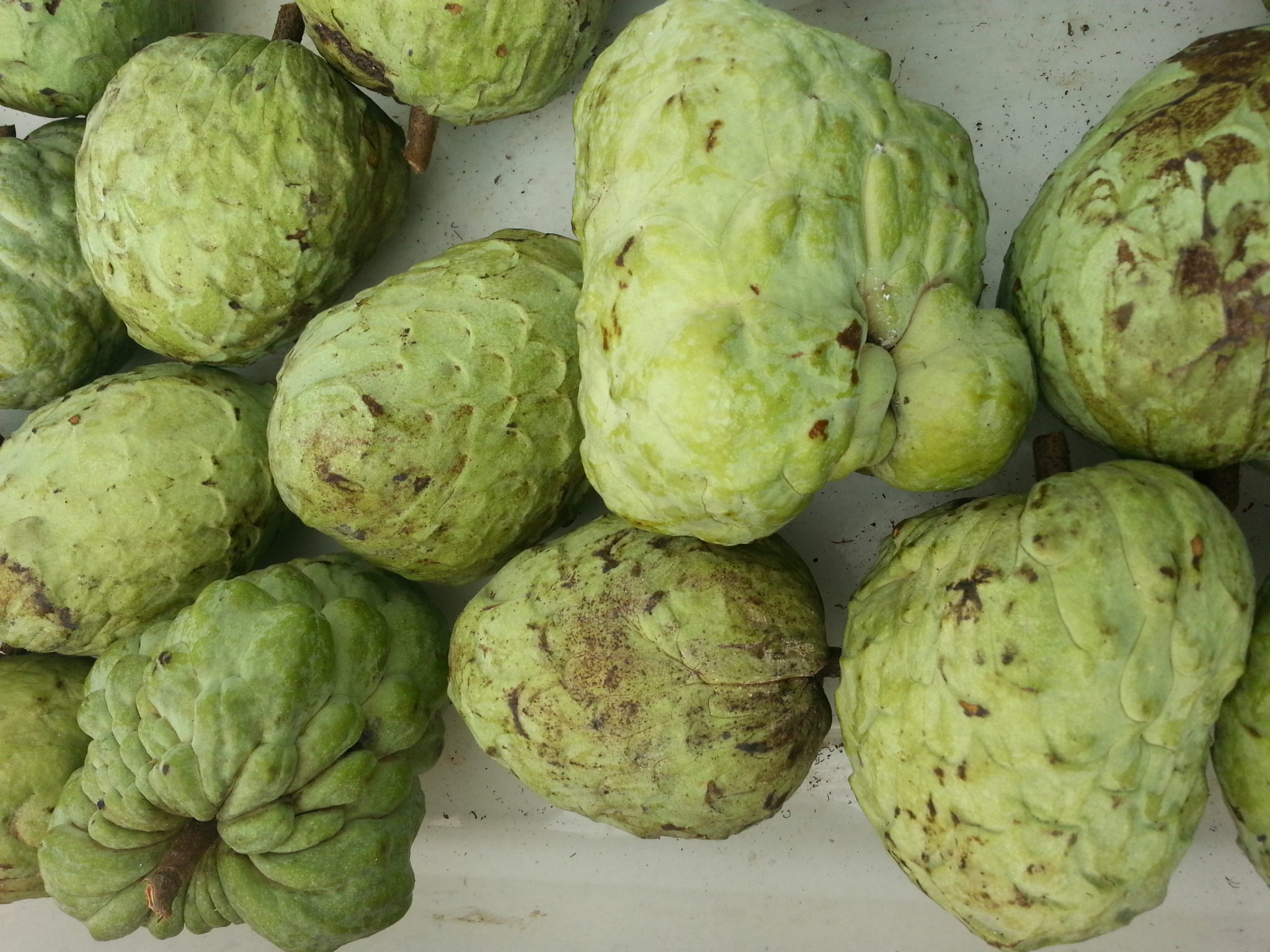
Atemoya/Cherimoya

20131102_094850

Atemoya is a hybrid of two types of annona fruits which are sugar apple and the cherimoya.  The sugar apple is what we refer to in the Philippines as “atis” the word I believe came from the old Mexican word “Ate” which refers to sugar apple.  The crossing of these two types of  Annona fruits was first made in 1908 by P.J. Wester,  a horticulturist in Florida.  The result was successful and they named it “Atemoya”.


The Atemoya fruit has bumpy skin and the white flesh is not segmented  like the “atis” and has black seeds which are not edible.  The taste of the atemoya resembles that of  a mixture of pineapple with a hint of vanilla.  It is juicy and sweet and slightly tart.  The fruit is easily bruised so it does not store very well and should be eaten fresh.   Chilling it and making a smoothie is also the best way to enjoy this amazing fruit.


The health benefits of the Atemoya is impressive.  It contains Vit. C,  B-Vitamin Complex,   lots of anti-oxidants which we know  helps prevents cancer, lots of fiber for colon health, and a well-balanced ratio of potassium and sodium which can be utilized as electrolytes for active people.  It also contains phyto-nutrients like lutein and beta carotene.  And best of all, atemoya is low in calories which is also good for weight watchers.


Similar Posts

  • Lime/Dayap

    Lime is one of my favorite citrus fruit. I use it especially in making Mexican salsa. I like the fresh flavor of the juice combine with tomatoes, onion, jalapeno pepper and the fresh herb cilantro. After making the salsa I can make my favorite dip the guacamole. Avocados are in season now so it is…

  • Chico/Zapodilla

    Chico/Sapodilla Chico – (Manilkara Zapota-bot. name) is a very popular fruit in the Philippines. Although it is not native to the Islands, the fruit has been widely cultivated. It is in season during the months of January till February. In Hawaii they can be seen in the farmers market up to the month of May….

  • Buko/Young Coconut

    Young coconut or “buko” as we call it in the Philippines is gaining popularity nowadays. It might as well be because researches are always coming up with good news about it, how it is good for you.  The list of nutritional benefits goes on and on. I’m happy that I grow up enjoying young coconuts. …

  • Camachile

    Camachile – (Pithecellobium dulce) – is a fruit that we eat in the Philippines.  It’s plentiful during the summer season.  The camachile taste sweet but dry.  It has black seeds and we used to play with it. The fruit is unusual because of its coiling.  It looks like a bean and it actually belongs to…

  • |

    Kamansi

      Kamansi also known as breadnut  (bot. name- Artocarpus camansi – blanco) is a relative of breadfruit and jack fruit.  The breadfruit has more pulp and small seeds while the kamansi has bigger seeds and less pulp and  just like the  jack fruit, the seeds are edible and can be boiled or roasted and a…

  • |

    Breadfruit

    Breadfruit is called ‘rimas’ in the Philippines. It is a fruit and vegetable at the same time. We eat the fruit by boiling or grilling and steaming. My grandma always serve us breakfast of boiled “rimas” and freshly grated coconut with sugar. It’s so tasty and good for your health too. It has a texture…