|

Jackfruit

20131109_093352

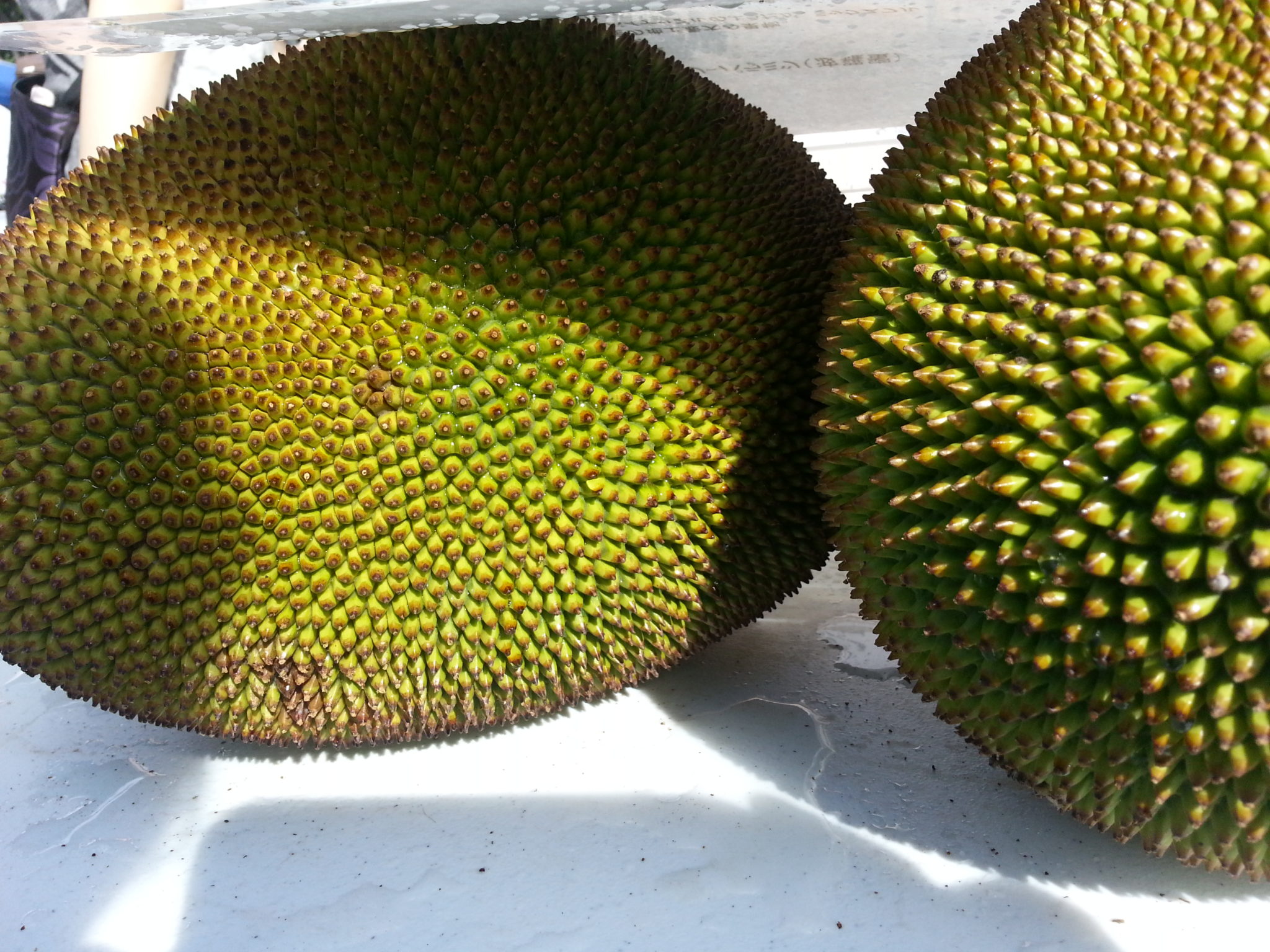
We call the jackfruit “langka” in the Philippines.  I consider it as the biggest fruit ever.  When I was young, we  nicknamed it “hog” because sometimes it grows as big as a pig.   I remember my grandma’s jackfruit tree in the farm and the fruit almost touches the ground.  I also remember eating the fruits when it is still pencil size. (We eat everything when I was a kid.)  The flesh of the fruit is golden yellow in color and is segmented.  Each segment has a seed inside and is also edible.  We boil the seeds and eat them like nuts.  There is a thin skin which you need to remove before eating the seeds.  The fruit has a wonderful aroma when it is ripe so you know when it is ready for picking.

I did not know the health benefits of  jackfruit back then.  I just eat the fruit like crazy because it is sweet and delicious.  It is normally used for making desserts like ice cream, halo-halo, guinatan with mochi balls, and the list goes on.  If you can not find fresh jackfruit in your area, it is available in groceries as preserved.  We also used it as a vegetable when it still immature.  The usual recipe for it is cooked in coconut milk with lots of spices.


Jackfruit has Vitamin C which is good for your immune system to protect against common infections like  colds, coughs and fever.  It also have complex carbohydrates which provides energy with its simple sugar content without cholesterol.  It has anti oxidants, phyto-nutrients and flavonoids for fighting cancer.  The high amounts of anti-oxidants from jackfruit neutralizes the free radicals  and acts as a shield to protect your DNA.  It also has potassium for maintaining blood pressure.  It  has a high fiber content for colon health  and aids in digestion.  It also contains Vitamin A for vision and helps to avoid having macular degeneration and cataracts.


Similar Posts

  • Artichoke

    Artichoke is perennial vegetable that belongs to the thistle family of plants. The edible part of the plant is the bud before it opens into a flower. The immature florets in the center of the bud is called the “choke” but its not edible. You have to remove it from the base called the heart,…

  • Togi/Wild root starch

    Togi is a root vegetable that most Filipinos eat as a form of starch much like eating taro or sweet potato. Believe it or not I could not find any reference for this tuber called “togi” in the Philippines even in the Wikipedia so I will not have an English name for it. Anyway, it…

  • Mizuna

    Mizuna is a Japanese green vegetable that is gaining popularity in the US. It is in the family of Brassicas which includes kale, rapini or broccoli rabe, broccoli and cauliflower. It is used mainly by Japanese in making soup for New Year celebration as sort of good luck. But its being used now in green…

  • Lettuce

    More tips about lettuce, let some plants to bolt into flower. Then save the seeds for your next planting. I always do especially the ones I have right now is not available anymore in the catalogs. My old friend ordered it from Parks Seed, but they do not have it anymore. The variety is called…

  • Winged Beans

    I sowed the winged beans seeds together with the long beans and hyacinth beans last February. The long beans is almost finished producing but the winged beans are just starting to flower and I just saw one bean. Because the seed of the winged beans is so hard, you need to scarify it or soak…

  • Jicama/Singkamas

    Jicama or singkamas is one of the favorite snacks during the summer season together with watermelon, cantaloupe and pineapple not to mention mango. In our province in Zambales, there is a town called San Marcelino which is the main producer of this succulent, crispy and sweet jicama. Lots of buses and cars stop in the…