Guava

image

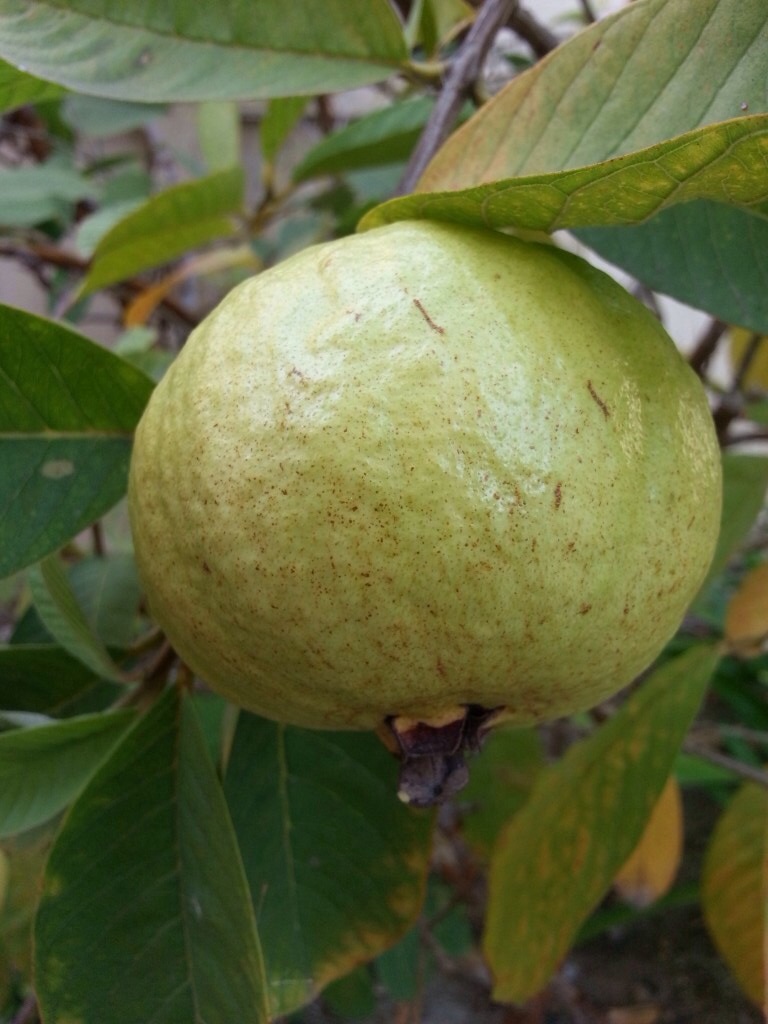
Guava (Psidium Guajava) is a tropical fruit native to Mexico, Central America and the northern part of South America and is called guayaba, a Spanish word which the Filipinos used and became “bayabas” in the native dialect.

The tree can be grown from seeds, and will start fruiting within 2-4 years. It will produce fruits within its life span of 30-40 years depending on the variety. The trunk of the tree can be used as firewood and is being used today in Hawaii for smoking barbecue. The leaves are green and used in folk medicine to treat diarrhea. The fruits can be round or oval in shape and when you slice it open, the meat which is full of seeds also varies in color. Some are white and some are light or dark pink in color.

The fruit tastes sweet with a little bit of sourness. I like to eat guava when it’s ripe but not over ripe. It would be crunchy and juicy. The fruit is also filled with seeds that’s why birds like them too. The birds are responsible for the dispersal of the guava seeds in the forests. But most backyard trees are store bought and apple guava is the most popular variety chosen because of its thick fleshy skin and also bigger in size. We call it “Guava Java.”

Guavas have lots of uses and most are culinary. The ripe fruit is used in the Philippines to make “Fish Sinigang” a recipe which requires something sour to flavor the soup. We normally use tamarind for that. The juices are extracted for making beverages and cocktails, but it’s also popular in making jams and jellies. It also have healthful benefits because it contains Vitamins C and A and the phytochemical lycopene which is an anti-oxidant or anti-cancer.

Similar Posts

  • Green “Saba” Banana

    Green “saba” banana or commonly called plantain is very common in the Philippines as a snack food. I grew up practically eating this type of banana. It has more starch than sugar compared to other bananas like apple bananas for example. That’s why when you eat this raw, even if its ripe, it’s not as…

  • Jackfruit/Langka

    Jackfruit or “langka” is the biggest fruit in the fruit kingdom I think. Anyways, it is one of my favorites. I took this picture in the Philippines when I was there on vacation. I was just amazed to see the tree full of fruits. I remember growing up in the farm where my grandparents live….

  • Rambutan

    Rambutan is one of those exotic fruits that it would take real courage to begin trying and eat it. But once you tried it, you’re hook for life. It is sweet and refreshing. Rambutan is an Indonesian word meaning “hairy” and the fruit is hairy so everyone calls it rambutan even in Philippines. It is…

  • Surinam Cherries

    I don’t know much about Surinam Cherries. I just happen to see these beautifully colored fruits in my neighbor’s yard and I took a picture of it. It also inspired me to do a painting of it. I believe I blogged that painting last February. Since I only knew little about this fruit I did…

  • Tamarind (Sampalok)

    Tamarind or sampalok as we call it in the Philippines is a versatile fruit. We can make it into candy or jam, we can use it in cooking as a souring agent for the ever popular “sinigang” or you can eat it as it is ripe or raw. Also the leaves were used too in…

  • Calamansi/Calamondin

    Calamansi or calamondin – (citrofortunella) is our lemon counterpart  in the Philippines. It is a fruit but is more widely use as a condiment.  It is a good accompaniment for pancit or rice noodles, rice porridge or arroz caldo and also can be juiced for a refreshing drink.  It is sometimes used in “sinigang” or…