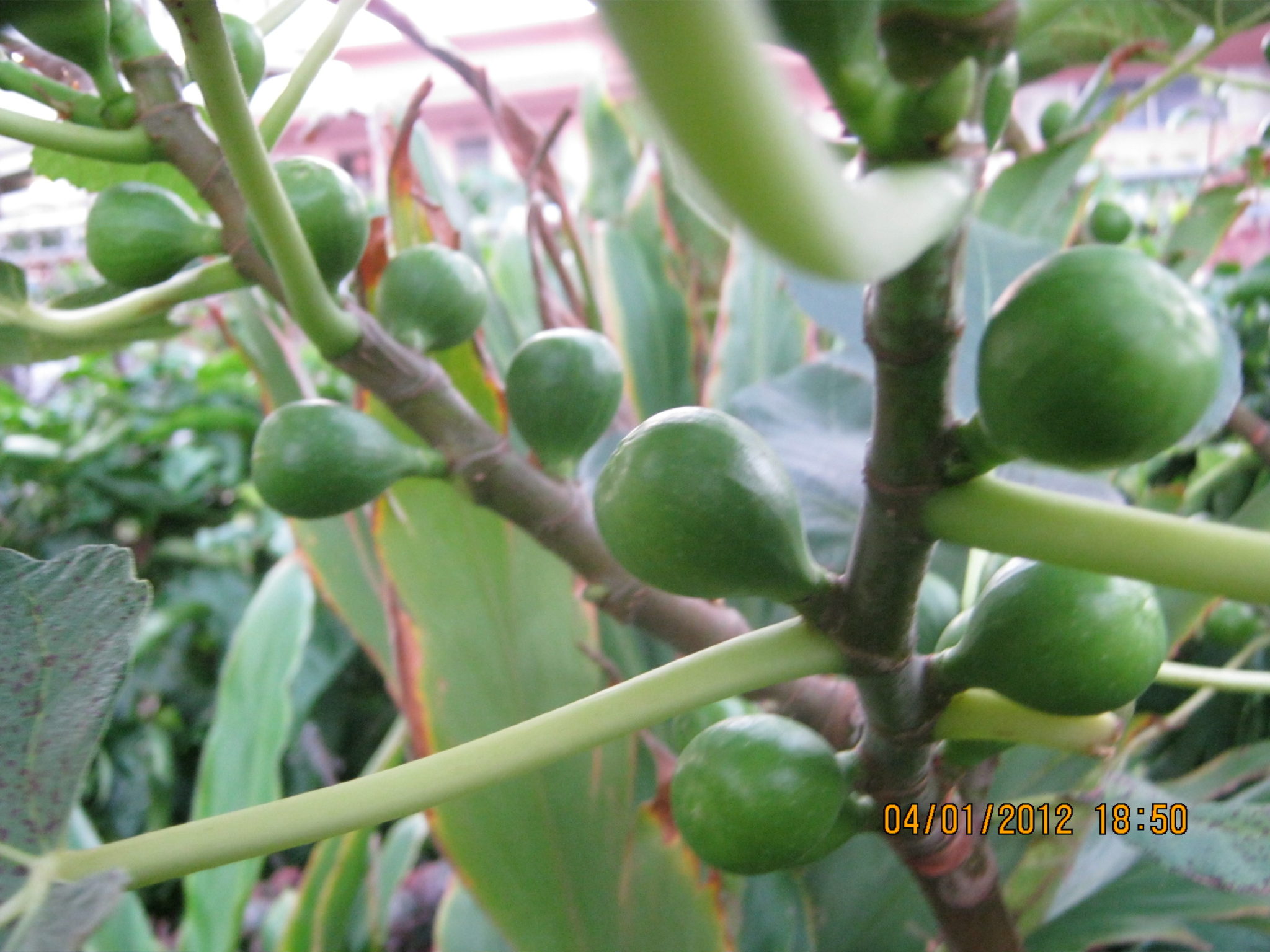
Fig Tree

My fig tree in the garden came from a cutting. I took some branches when the tree owner decided to prune her fig tree which grew into a tall tree about ten feet or more. We can only grow up to five feet plants in the garden. Luckily the fig cuttings grew and actually have been giving me fruits to enjoy whenever I’m in the garden. I have the tree for about four years now. I just planted it in a pot and it grew horizontally which is good for me because I don’t want it to grow taller than five feet. I have pruned it a couple of times to maintain its height. The fruit I get is green that turns into yellow as it ripens. I also have to feel it too. When it is soft to the touch then its ready to eat.
Common fig tree (ficus carica) is native to the Middle East. It thrives in sunny, dry climate.
The fruits can be eaten fresh or dried and can be made into jams. I only knew figs before in Fig Newton cookies. It also have nutritional benefits like calcium and fiber, and micro nutrients considered as antioxidants. It also have laxative properties.
Fig has been mentioned in the Bible many times and I guess the importance of fig in ancient times cannot be overlook.

Similar Posts

  • Mangoes

    Mango season just ended, at least in our tree. We have Pirie mango and Hayden. The mangoes in the picture are Hayden. I have a good time picking the mangoes in the backyard. This year I was able to make lots of mango jam. As soon as the last mango was picked though, the trees…

  • Guava

    Guava (Psidium Guajava) is a tropical fruit native to Mexico, Central America and the northern part of South America and is called guayaba, a Spanish word which the Filipinos used and became “bayabas” in the native dialect. The tree can be grown from seeds, and will start fruiting within 2-4 years. It will produce fruits…

  • Coconuts

    Coconuts when eaten fresh and young is considered as a refreshment when I was growing up in the Philippines. We drink the water inside the coconut and then by cutting the coconut in half, the white flesh will be revealed and that’s very good to eat indeed. The mature ones are utilized as a culinary…

  • Tamarind (Sampalok)

    Tamarind or sampalok as we call it in the Philippines is a versatile fruit. We can make it into candy or jam, we can use it in cooking as a souring agent for the ever popular “sinigang” or you can eat it as it is ripe or raw. Also the leaves were used too in…

  • Calamansi/Calamondin

    Calamansi or calamondin – (citrofortunella) is our lemon counterpart  in the Philippines. It is a fruit but is more widely use as a condiment.  It is a good accompaniment for pancit or rice noodles, rice porridge or arroz caldo and also can be juiced for a refreshing drink.  It is sometimes used in “sinigang” or…