Nasturtiums
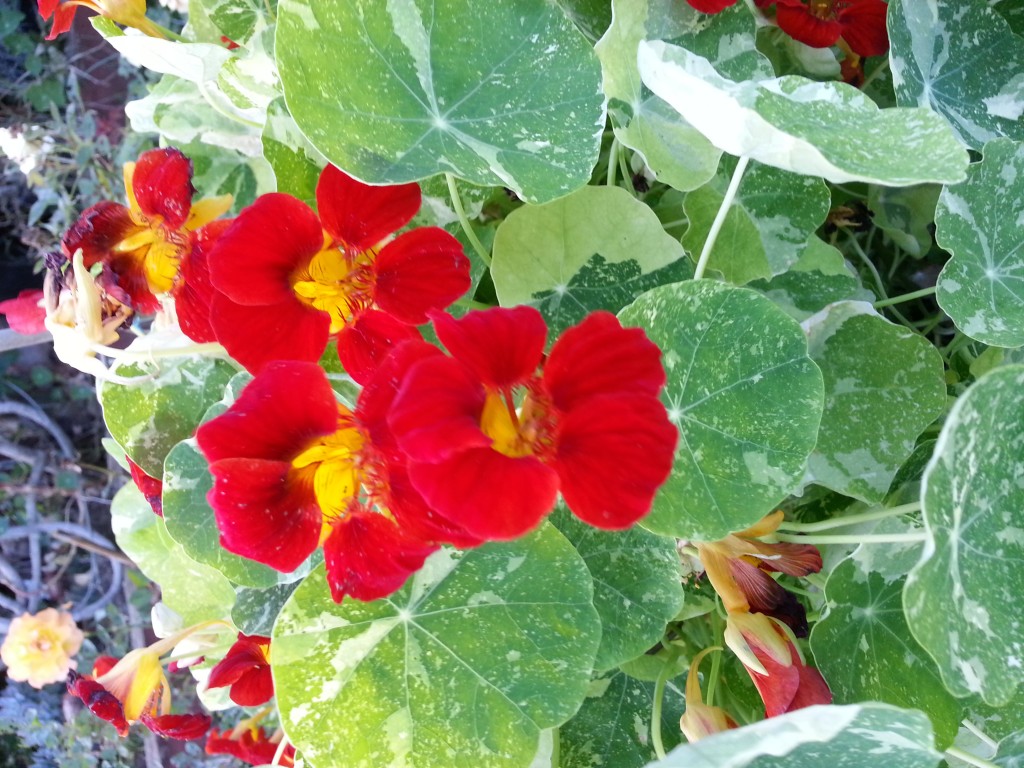
Nasturtiums – Tropaeolum majus – is becoming the number one popular among the edible flowers. It’s not only tasty and peppery but planting and growing it yourself is almost foolproof. They don’t need fertilizer and they grow in poor soils and give more flowers than if you grow them in very rich soil. It prefers full sun and regular watering though. But not too much because it it also drought tolerant that’s why you will find them growing in the wild.
Nasturtiums are native to South America particularly Peru and was brought back to Europe by the Spanish conquistadors in the late 1600’s. The famous Swedish Botanist Carolus Linnaeus gave nasturtium its Latin name “Tropaeolum” from the word “tropaea” meaning helmets which were used by the Roman warriors. The red flowers seems to look like bloody helmets back then.
It is also known as Indian cress and related to the watercress we know today. They both have the pungent and peppery taste I thought tasted like “wasabi”.
The plants come in two varieties, the trailing ones and the bush kind. The trailing ones needs a trellis or just maybe trained to go up the fence. The bush type could be planted in containers that you can incorporate in your garden design to add splash of colors during the summer months. Even Monet planted them in his Giverny home in France. The flowers come in a variety of colors from red, dark red or maroon, white, yellow and salmon. Orange and yellow colors are the most common. The flowers also come in single or double petals. The young leaves can also be eaten as long as you do not spray any pesticide on the plant. You must only eat organically grown edible flowers such as nasturtiums and be careful if you have allergies. The young seeds can be eaten too and could be eaten like capers. I like to collect mature seeds for the next season’s planting.
Nasturtiums are not only pretty for garnishes and good to eat but it also provides Vitamin C and A and also Vitamin D.
The most popular way to eat the flowers is by mixing it into salad greens with some of its leaves. Some mix it in cream cheese and other herbs to use for hors d’oeuvres or dipping sauce and also in making herbed butters.