Kinchay
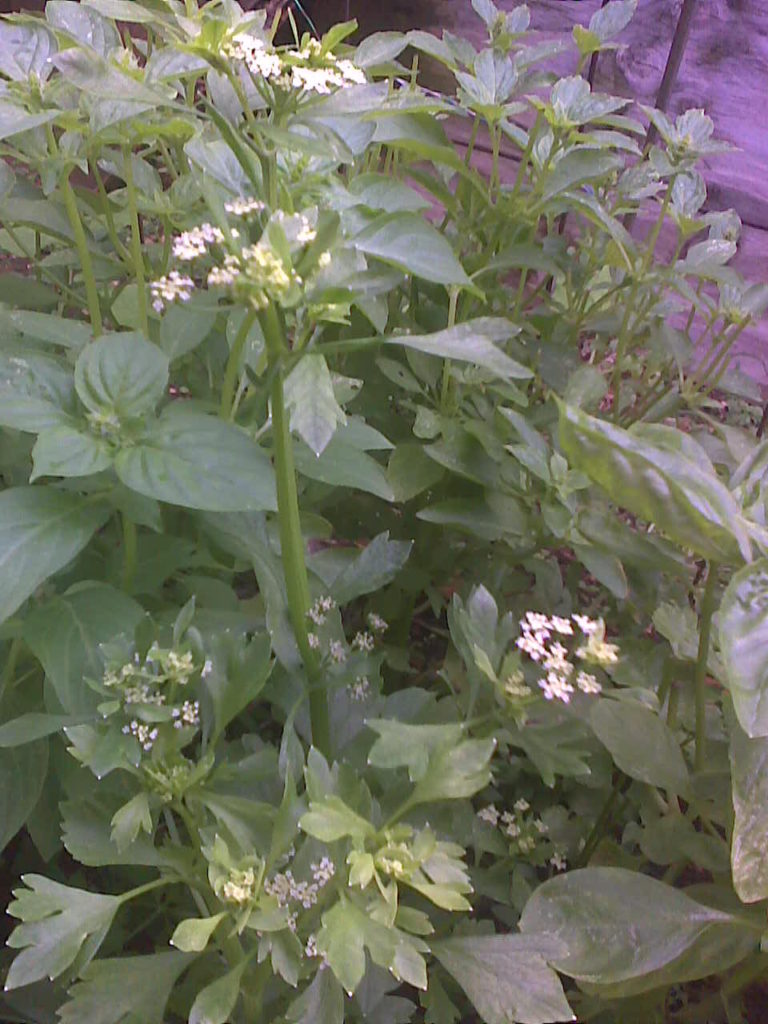
KINCHAY- LEAF CELERY
Apium Graveolens
Kinchay or Leaf Celery (Chinese Celery) is a very versatile herb that we use for everyday cooking in the Philippines. It has the flavor and aroma that we like to impart in our local dishes like pancit, chop suey and soups. We always use it together with spring onions (green onions) as garnish and flavoring.
Kinchay or leaf Celery is grown in the Mountain Province in the Philippines. It is one of the vegetables that grows in cool climate. Trinidad Valley is famous for all the produce like broccoli, spinach, cabbage, red and green bell peppers, carrots, celery and strawberries. Bagiuo City is like a Mecca during the summer months, everybody wants to avoid the heat. It is the ideal place to grow Kinchay or leaf celery. In Olongapo City where I grow up, the market place is always full of produce from Bagiuo so we don’t miss out on this delectable herb.
But I was surprised to learn that I can grow this herb here in Hawaii. I always buy them in Chinatown when in season but one time I see the seeds in a nursery store I immediately bought a packet and sowed them. I was happy they grow like weeds in the garden. As long as you water them constantly and the soil is well amended with compost they will thrive and I have my constant supply of my favorite herb for all my cooking needs. And the best part is I can let it mature and flower so I can gather the seeds for the next season’s planting.
Kinchay is easy to grow from seeds. Sow some seeds in a container with starter soil and keep them moist. Make sure to cover them with a screen or the birds will have a party. You may transplant them in the garden bed if they are about two or three inches high. I would suggest adding some horticultural sand to the soil for good drainage. You may add some fertilizer too just make sure it is a balance fertilizer with same numbers all the way like 10-10-10 or 16-16-16.
I am sure Kinchay has also some medicinal value just like the regular celery like as a diuretic, good for digestive system and helps in prevention of kidney disease. It also has Vitamins A, B-complex, C and E. These vitamins are also known as anti-oxidants so kinchay would also be a cancer fighter food. As a cancer survivor myself that’s a big plus.
Meanwhile, I will just enjoy using this herb in my recipes to make it authentic Filipino cooking. I remember one time I brought Pancit to work and my co-workers said as if they went home to the Philippines when they tasted it. That’s the best complement I think.