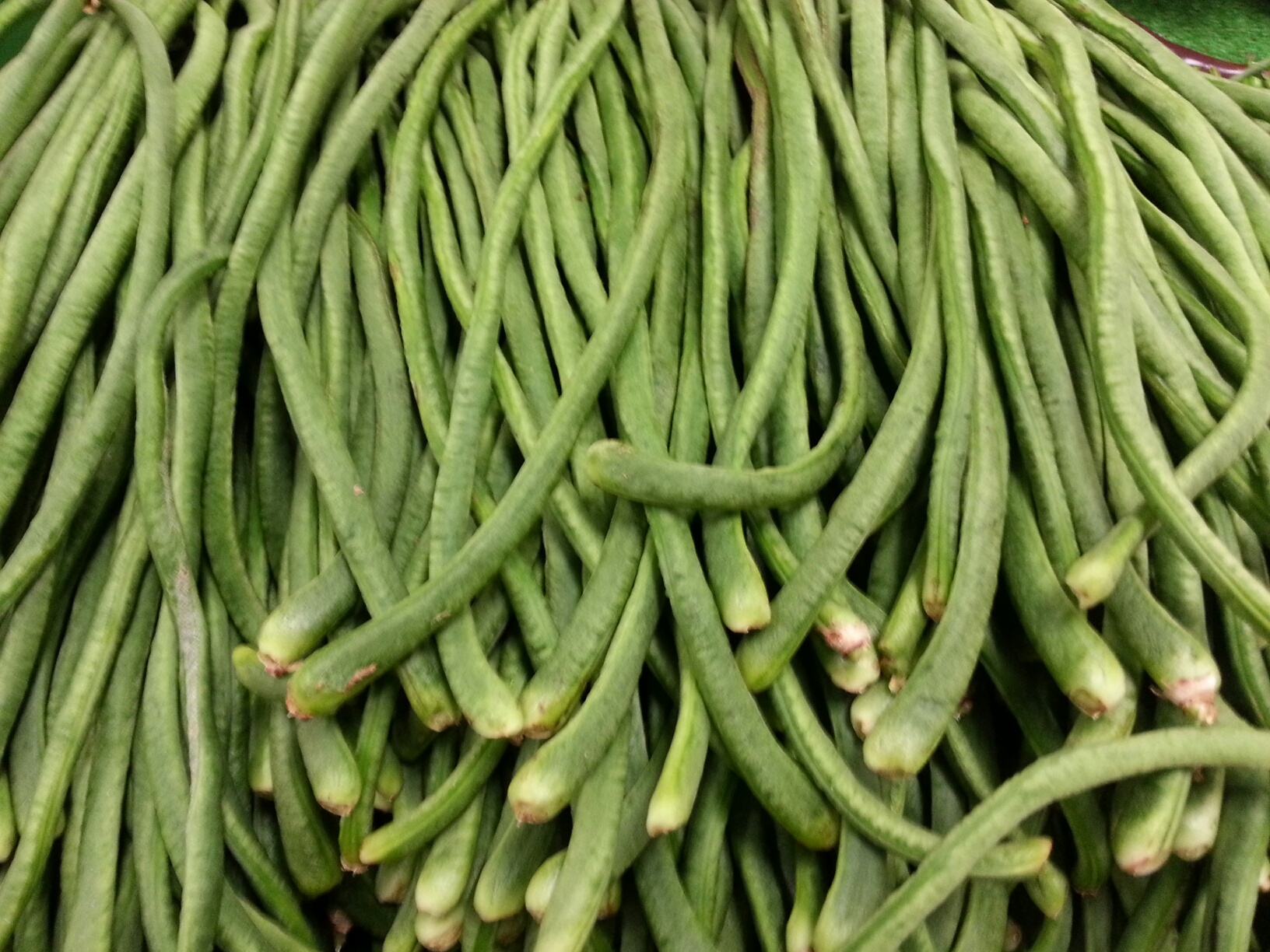
Long Beans/Sitaw

20140331_092245_resized

Long beans or sitaw as we call them is in the member of the family of legume except they are eaten as green pods unlike other beans like navy beans or azuki beans. They are also called yard long beans or asparagus beans. I remember eating these beans cooked as adobo. It taste good and can be served as a vegetable side dish. But it is mostly used in making “bulanglang” which is a dish consisting of mixed vegetables like eggplant, okra, bittermelon and pumpkin (kabocha). It is also used as an ingredient in what we call “kare-kare” where oxtail is cooked in a sauce flavored with peanuts and toasted rice. The vegetables which are long beans, eggplant, pechay (bok choy)are added when the oxtail is fork-tender. In the Philippines they also use banana hearts in this dish. I substitute artichokes for it because sometimes banana hearts are hard to find.

Long beans are summer vegetables and it is good to start planting the seeds in spring where there is direct sun. It’s better to prepare the trellis or fence for the vines to hold on to before putting the seeds on the ground. I like to plant it directly to where it will grow because transplanting sometimes is not reliable. You don’t want to disturb the roots too much. In one month you will see some white and purple flowers appearing. Bees love the flowers so watch out. It is also advisable not to handle the vines when wet because disease can spread.

I like long beans in the garden. It comes in different colors too. One variety is dark maroon in color and the other I have not tried planting yet is the red variety. I saw it in a garden catalog and maybe order some seeds to start. I always manage to save some seeds for planting the next season, so ordering just a few seeds would be more than enough as long as they thrive and give me a lot of beans. I’m going to take it as a challenge.

Similar Posts

  • Shallots – Philippine

    Shallots in the Philippines is called Sibuyas Tagalog or Sibuyas Iloko. Sibuyas is a word derived from Spanish word “cebolla” which means onion. I like this type of onions fresh mix with tomatoes and used as a side dish for grilled fish, especially milkfish. But anything grilled like pork or chicken or even beef will…

  • Taro/Gabi

    Taro plants are commonly grown here in Hawaii but it seems hard to find if you want to make your own laulau. So I decided to give it a try and plant some. The root or corm is actually given to me by a Tongan friend because that’s all she have in her garden. I…

  • Green Papaya

    Papayas are very common here in Hawaii but most of them are for eating as fruits. Meanwhile we use the green papaya as vegetable. It is a different variety of papaya not like the “Solo” or “Sunrise”. This type is more elongated in shape and actually bigger than the Hawaiian variety. Just like the Thai…

  • Radish (Watermelon)

    I have been experimenting on almost every new things that come out of seed catalogs. I find it very interesting and challenging at the same time. One of those experiments is planting this “watermelon” radish. I planted them just like other radish seeds. They grow fast and as soon as you can see the roots…

  • Achuete

    Bixa Orellana Achuete is probably the most important ingredient in the Filipino cuisine. The bright red color that imparts in the food makes the food more palatable and presentable. It is most used in recipes that we inherited from the Spaniards like the dish we call “menudo” or the famous “paella”. Achuete is an evergreen,…

  • Pumpkin/Kalabasa

    This is the pumpkin now after I helped it to be pollinated (notice I have also long beans in the same trellis). Two weeks after I hand-pollinated the female pumpkin flower, it has grown and almost ready to be picked. That’s one of the things that keep me going when it comes to gardening. Patience…