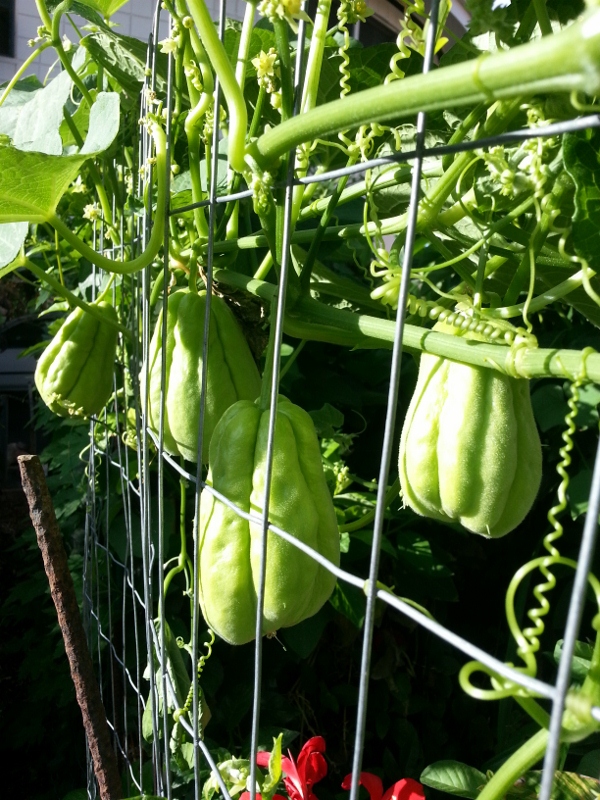
Sayote


The sayote fruits are abundant this time of year in my garden, I don’t know if it is the season for sayote.
I love sayote. I used it in all kinds of recipes like Chicken Tinola, Chop Suey or stir fry mix vegetables, pancit and fresh vegetable lumpia or fried vegetable lumpia.
One thing about sayote, when you peel it, it leaves a sticky residue in your hands. It will go away eventually.

Similar Posts

  • Oakleaf Lettuce

    I have been experimenting on the types of lettuce that will grow well in my garden. So far I’m successful. Like this red oakleaf lettuce I planted a month ago. They are so good, crunchy and sweet. I like the red color in combination with the green leaves of the Manoa lettuce in my salad…

  • Kamatis/Tomato

    Kamatis or tomato is the ever popular vegetable in the world, rightly so because of its versatility in the culinary world and also for its nutritional value. Regarded as either a fruit or a vegetable, either way, tomato is good to eat by itself or combined with other foods especially in salad or salsa. There…

  • Luffa Gourd/Patola

    Patola is what we call the luffa gourd. There are two types of this gourd but I am only familiar with the one that has angles or ridges on the skin. This is the specie called Luffa Acutangula. The other specie must have been introduced in the Philippines at a later date. We call it…

  • Baguio Beans

    We call these delectable green vegetable Baguio beans because they are mostly grown in the Mountain Province where the temperature is cooler than the lowlands in the Philippines and Baguio City is the most popular destination during the hot summer months.

  • Samsamping/Butterfly Pea

    Samsamping – Butterfly pea (Scientific name – clitoria ternate) I’m a member of a community garden and as most gardeners I’m curious of what other gardeners have in their plot. This blue flowers caught my attention and I asked for some seeds because I love blue flowers. I asked for the name of the plant…

  • Amaranth/Kulitis

    Amaranth Kulitis
    Amaranthus is the botanical term for the genus amaranth, a short lived perennial plant that used to be only known as ornamentals and now being cultivated as leafy green vegetables comparable to kale in nutritional value.