Kale
Kale is becoming the most popular vegetable nowadays because of the health benefits it provides. It has cholesterol lowering properties which is good for me because my cholesterol is quite high according to my doctor. It also lowers the risk of certain type of cancers like ovarian cancer which I battled with two years ago. It also is good for detoxifying your body, has anti-oxidant and anti-inflammatory benefits.
Kale just like all other cabbages that belong to the brassica family is high in vitamins like Beta-carotene, K and C, lutein and more.
Kale can be steamed or made into chips. Some even make into smoothies as a health drink. I particularly like to include it in my broccoli stir fry recipes. I used chicken, beef or pork or even tofu for protein. Then you can add as many vegetables as you like. My favorite vegetables to add are bean sprouts, green and red bell peppers, mushrooms, kinchay or leaf celery, and green onions.
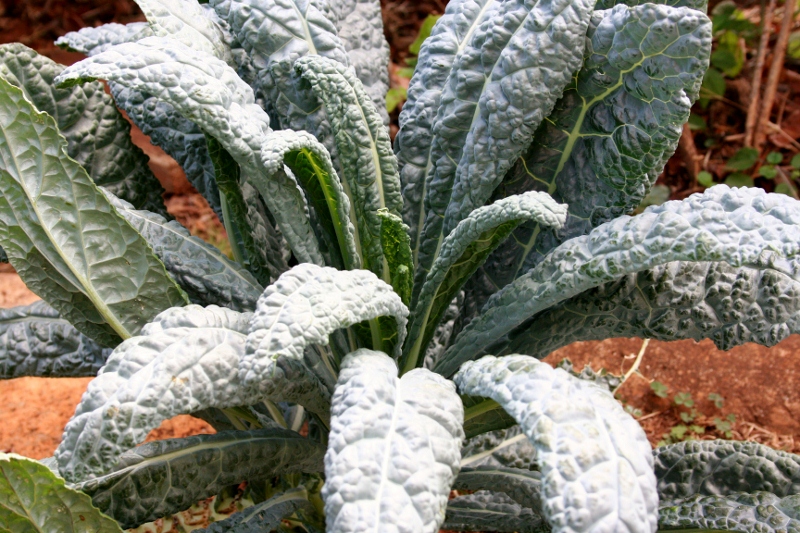
The one in the picture is the variety called Toscano Kale. There are other varieties and also some ornamentals. In Japan during the winter season, you can see all different colors of ornamental embellishing their public parks. Its quite a spectacle to see vegetables decorating the parks.
Kale is also quite easy to plant. I always start from seeds. I like the idea of seeing the seed grow. In about a week you can see it sprouting, then about maybe two more weeks, it would be ready for transplanting in the garden bed. After a few more weeks you will have an almost never ending supply of kale. Watch out for white flies, it is always the pest of this vegetable. If I see some in the leaves, I mix dishwashing soap and oregano oil in a sprayer and spray the plant and under the leaves. After about ten minutes or so, I rinse it well with a water hose to remove the soap and of course the dead pests.