Coconuts
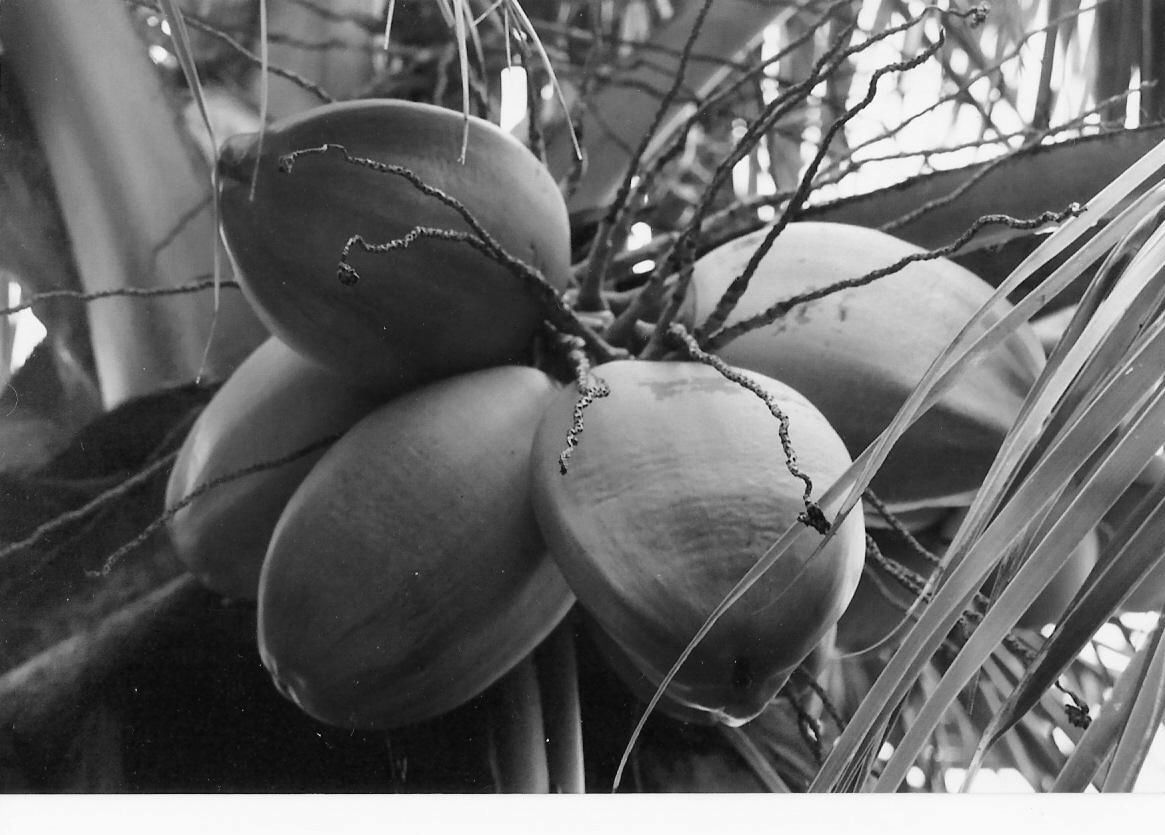
Coconuts when eaten fresh and young is considered as a refreshment when I was growing up in the Philippines. We drink the water inside the coconut and then by cutting the coconut in half, the white flesh will be revealed and that’s very good to eat indeed. The mature ones are utilized as a culinary ingredient for recipes calling for cream, we call coconut milk. It has to be grated and squeezed in order to get the milk. Coconut meat can also be made into desserts or candies.
The coconut tree can be used to make lumber, furniture and kitchen utensils. We call it cocolumber.
The leaves we used for wrapping sticky rice to make a savory snack we call suman. Sometimes you can make hats or mats out of it.
The hard part of the leaves can be cleaned and gathered together and use as a broom in the backyard.
The hard shell of the mature coconuts, when polished can be made into crafts like handbags, buttons, kitchen items like a ladle or spoon. The folk dancers used them for making sound while they dance.
I did not have any idea about how large the scope of the different uses of coconuts till I was in high school. I learned that it is one of the nation’s biggest industry we call copra industry. It is made into oil and used in different products like soaps and shampoos and other cosmetics besides oil for cooking.
It is fascinating to learn all about coconut that I have taken for granted while I was young.
But today I’m happy to see that coconut water that I used to drink from the fruit itself is now sold as coconut water everywhere and that it has health benefits especially for athletes.
