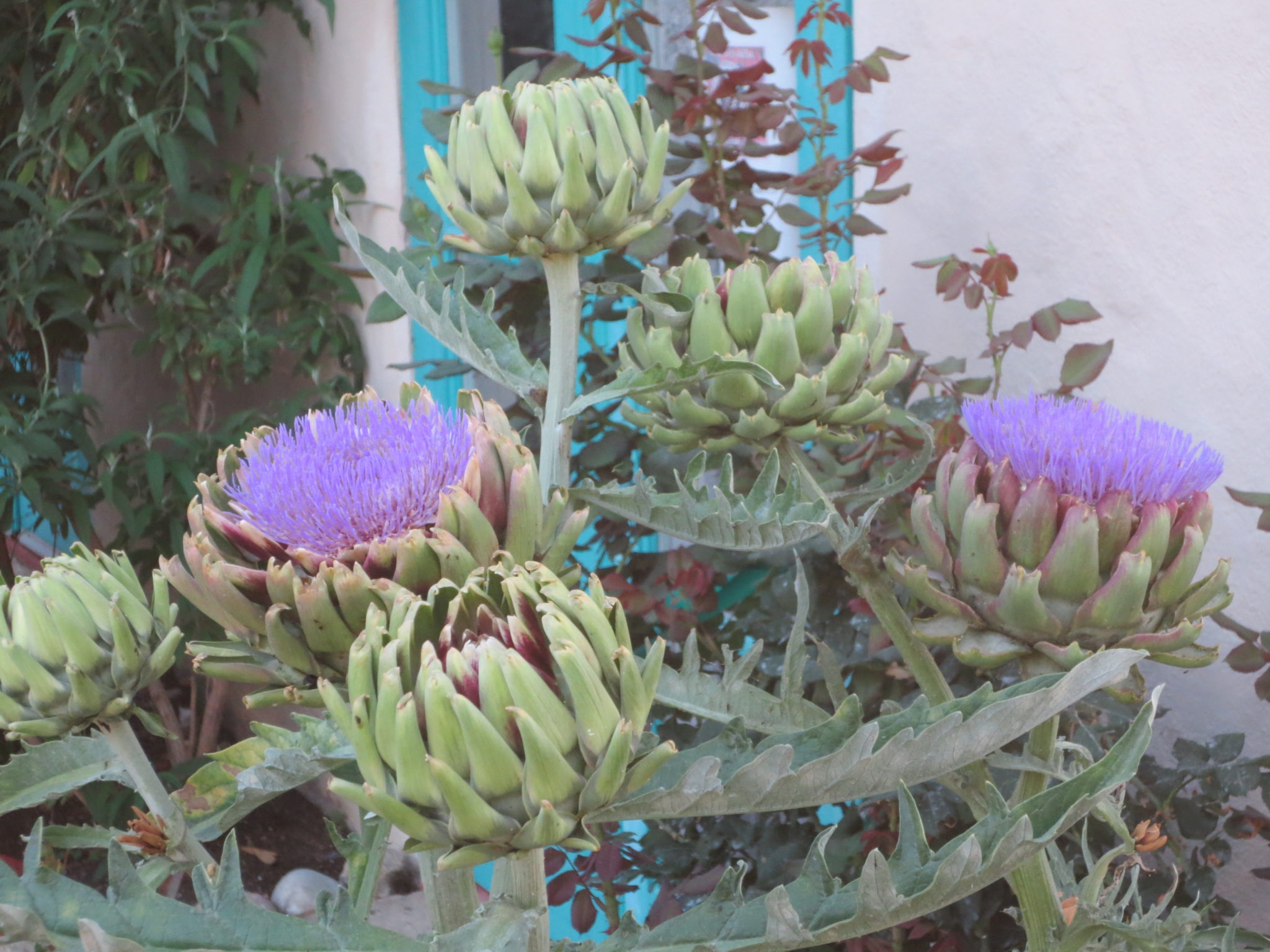
Artichoke

San Diego Vacation 292

Artichoke is perennial vegetable that belongs to the thistle family of plants. The edible part of the plant is the bud before it opens into a flower. The immature florets in the center of the bud is called the “choke” but its not edible. You have to remove it from the base called the heart, which is the best part of the artichoke. The buds after removing the thorns, can be boiled or steamed and dipped in a variety of sauces like aioli or mayonnaise.

It is native to the Mediterranean. It is the food of ancient Greeks and Romans and considered a delicacy and aphrodisiac.

It was introduced to the US in the 1900’s by the French immigrants in Louisiana and by the Spanish immigrants in California. In Monterey County, Castorville has been known to be “The Artichoke Center of the World” and holds an annual festival honoring these wonderful vegetable. It produces 100% of the artichokes in the whole state.

Globe artichoke is a green variety that is well cultivated. “Romanesco” is the purple variety.

They are interesting plant to grow as vegetable or as an ornamental plants. The flower buds when open produces a beautiful lavender color flowers which has a sweet fragrance just like the picture I have here. Not only they are pretty in the garden, they are very architectural plants growing up to 6 ft. tall, but they are also very nutritious.
Like their cousin thistle, they contain silymarin which is used to protect the liver and help to reduce bad cholesterol. It has vitamins C and B vitamins, folic acid and minerals like copper, potassium and iron.

I like to use artichoke as a substitute for banana hearts when I make our famous dish called “kare-kare. It’s really good.

Similar Posts

  • Super Chili

    I bought this super chili plant to to see how it will perform in my garden. Besides, my husband loves to eat them, the hotter the better for him. I like the pepper fruit because it is much bigger than the Hawaiian chili pepper which incidentally I am growing too in the garden. I have…

  • Pumpkin/Kalabasa

    This is the pumpkin now after I helped it to be pollinated (notice I have also long beans in the same trellis). Two weeks after I hand-pollinated the female pumpkin flower, it has grown and almost ready to be picked. That’s one of the things that keep me going when it comes to gardening. Patience…

  • Malunggay/Moringa Fruits

    Last January I featured Malunggay/Moringa leaves as one of the best green vegetables. This time it is the fruit. Malunggay fruit is green in color about 10 to 12 inches long and about 1/2 to 3/4 inch in diameter. When you open the fruit, it would have three sides with white meat and tender seeds….

  • Togi/Wild root starch

    Togi is a root vegetable that most Filipinos eat as a form of starch much like eating taro or sweet potato. Believe it or not I could not find any reference for this tuber called “togi” in the Philippines even in the Wikipedia so I will not have an English name for it. Anyway, it…

  • Prizehead Lettuce

    This is my latest experimentation on lettuces. I bought the seeds just because of the picture. I thought it would look good in my lettuce garden bed. So after a few weeks, I am starting to harvest them. In combination of other types of lettuce plus the arugula, it makes the salad more appetizing. It…

  • Cucumber Flowers

    After a week or so, I’ve been seeing cucumber flowers. I can’t wait to see what it looks like. That’s why it’s important that you label your seedlings to know what variety it is. In this case, I don’t know because a friend of mine just gave me the seeds. Anyways, pollination is important, so…