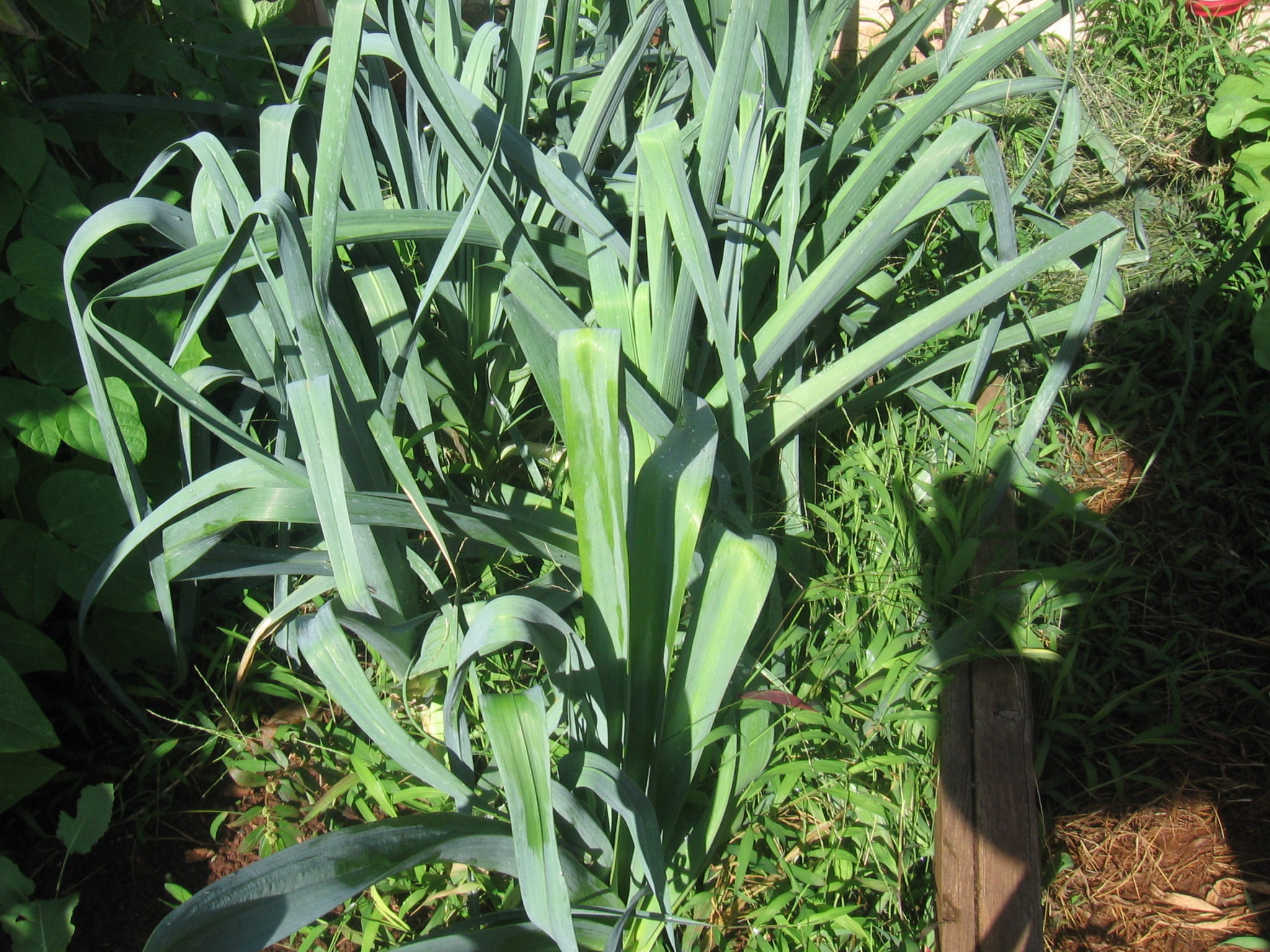
Leeks

Leeks

Leek is a vegetable that is related to onions and garlic which belongs to the family of Allium, scallions or spring onions and shallots included.

It looks like the spring onions only bigger in diameter. The white part closes to the roots is the most used in cooking, the green part or sheath of leaves being tough is utilized in soups for added flavor.

I like planting leeks in the garden. It is easy to grow from seeds. The garden bed needs to be amended with compost and maybe add a little horticultural sand for good drainage. You have to designate a place for them in the garden because they take long to mature to a marketable size. Besides you can leave them in the garden till you need them which is good for me. I always just pick what I needed for my cooking for the day so it works for me. The leaves of the leeks look good in the garden. The blue-gray leaves lend an ornamental look in the garden.

There is a type of leek they call Japanese leek. It is the bigger version of the scallions or spring onions. The leaves are hollow while the real leek is formed in sheaths like the leaves of amaryllis which incidentally is also related to leeks. You can blanched the leeks by hilling them or pushing the soil around them.

I always use leeks in making “nilaga”, a soup dish made of beef, preferably with bones, potatoes, and leafy green vegetables like bok choy/pechay, cabbage or napa cabbage. I also use “kinchay”/leaf celery in place of the regular celery. It can also be used in the dish we call “pochero” and the famous “bulalo”. These dishes are what you can call a one-course meal and is always served with steamed rice and patis/fish sauce or nampla as a dipping sauce except for “pochero” where the sauce is made of broiled and mashed eggplant with garlic and vinegar.

Similar Posts

  • Kamatis/Tomato

    Kamatis or tomato is the ever popular vegetable in the world, rightly so because of its versatility in the culinary world and also for its nutritional value. Regarded as either a fruit or a vegetable, either way, tomato is good to eat by itself or combined with other foods especially in salad or salsa. There…

  • Taro/Gabi

    Taro plants are commonly grown here in Hawaii but it seems hard to find if you want to make your own laulau. So I decided to give it a try and plant some. The root or corm is actually given to me by a Tongan friend because that’s all she have in her garden. I…

  • Malunggay/Moringa

    Malunggay/ moringa (Moringa Oleifera) is also known as horseradish tree because the roots taste just like horseradish.  It is also called drumstick tree because the fruit or bean pod is long.  The fruit is segmented in a triangle and has lot of seeds inside.  In the Philippines, we used the fruit or beans as vegetable. …

  • Malunggay/Moringa Fruits

    Last January I featured Malunggay/Moringa leaves as one of the best green vegetables. This time it is the fruit. Malunggay fruit is green in color about 10 to 12 inches long and about 1/2 to 3/4 inch in diameter. When you open the fruit, it would have three sides with white meat and tender seeds….

  • Jicama/Singkamas

    Jicama or singkamas is one of the favorite snacks during the summer season together with watermelon, cantaloupe and pineapple not to mention mango. In our province in Zambales, there is a town called San Marcelino which is the main producer of this succulent, crispy and sweet jicama. Lots of buses and cars stop in the…

  • Papaya/Green

    Papaya (Carica) can be eaten as a fruit or vegetable.  If you wait till papaya turns yellow then it can be eaten as a fruit. It is smooth and sweet and have this enzyme papain which is good for digestive functions in your body.  The green ones on the other hand can be prepared as…