Artichoke

San Diego Vacation 292

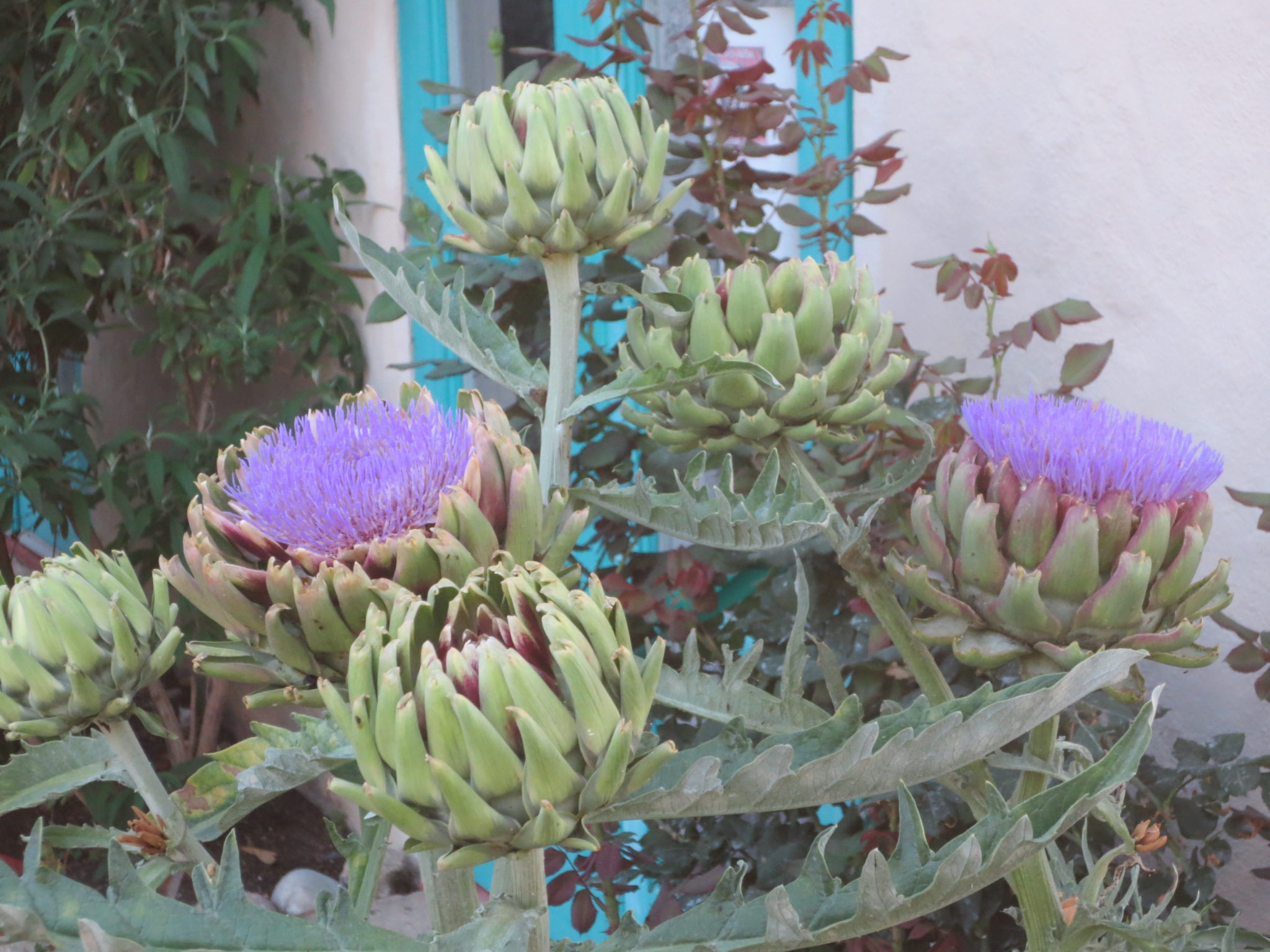
Artichoke is perennial vegetable that belongs to the thistle family of plants. The edible part of the plant is the bud before it opens into a flower. The immature florets in the center of the bud is called the “choke” but its not edible. You have to remove it from the base called the heart, which is the best part of the artichoke. The buds after removing the thorns, can be boiled or steamed and dipped in a variety of sauces like aioli or mayonnaise.

It is native to the Mediterranean. It is the food of ancient Greeks and Romans and considered a delicacy and aphrodisiac.

It was introduced to the US in the 1900’s by the French immigrants in Louisiana and by the Spanish immigrants in California. In Monterey County, Castorville has been known to be “The Artichoke Center of the World” and holds an annual festival honoring these wonderful vegetable. It produces 100% of the artichokes in the whole state.

Globe artichoke is a green variety that is well cultivated. “Romanesco” is the purple variety.

They are interesting plant to grow as vegetable or as an ornamental plants. The flower buds when open produces a beautiful lavender color flowers which has a sweet fragrance just like the picture I have here. Not only they are pretty in the garden, they are very architectural plants growing up to 6 ft. tall, but they are also very nutritious.
Like their cousin thistle, they contain silymarin which is used to protect the liver and help to reduce bad cholesterol. It has vitamins C and B vitamins, folic acid and minerals like copper, potassium and iron.

I like to use artichoke as a substitute for banana hearts when I make our famous dish called “kare-kare. It’s really good.

Similar Posts

  • Amaranth/Kulitis

    Amaranth Kulitis
    Amaranthus is the botanical term for the genus amaranth, a short lived perennial plant that used to be only known as ornamentals and now being cultivated as leafy green vegetables comparable to kale in nutritional value.

  • Super Chili

    I bought this super chili plant to to see how it will perform in my garden. Besides, my husband loves to eat them, the hotter the better for him. I like the pepper fruit because it is much bigger than the Hawaiian chili pepper which incidentally I am growing too in the garden. I have…

  • |

    Jackfruit

    We call the jackfruit “langka” in the Philippines.  I consider it as the biggest fruit ever.  When I was young, we  nicknamed it “hog” because sometimes it grows as big as a pig.   I remember my grandma’s jackfruit tree in the farm and the fruit almost touches the ground.  I also remember eating the fruits…

  • Luffa Gourd/Patola

    Patola is what we call the luffa gourd. There are two types of this gourd but I am only familiar with the one that has angles or ridges on the skin. This is the specie called Luffa Acutangula. The other specie must have been introduced in the Philippines at a later date. We call it…

  • Watercress

    Watercress is in the family of Brassicas like radish and mustard relating to their peppery flavor. It closely resembles the taste of nasturtiums and the name is the same but they are actually distant relatives and they are easy to grow. Watercress is not available in the Philippines when I was growing up so I…

  • Gourd/Upo

    Upo is one of my favorite vegetables. I practically grow eating this vegetable. My mom has a small garden in our yard and she always manage to grow upo by building a trellis for it to cling to. The trellis we call “palapa” is made of bamboo. It is build with four bamboo poles that…