Leeks

Leeks

Leek is a vegetable that is related to onions and garlic which belongs to the family of Allium, scallions or spring onions and shallots included.

It looks like the spring onions only bigger in diameter. The white part closes to the roots is the most used in cooking, the green part or sheath of leaves being tough is utilized in soups for added flavor.

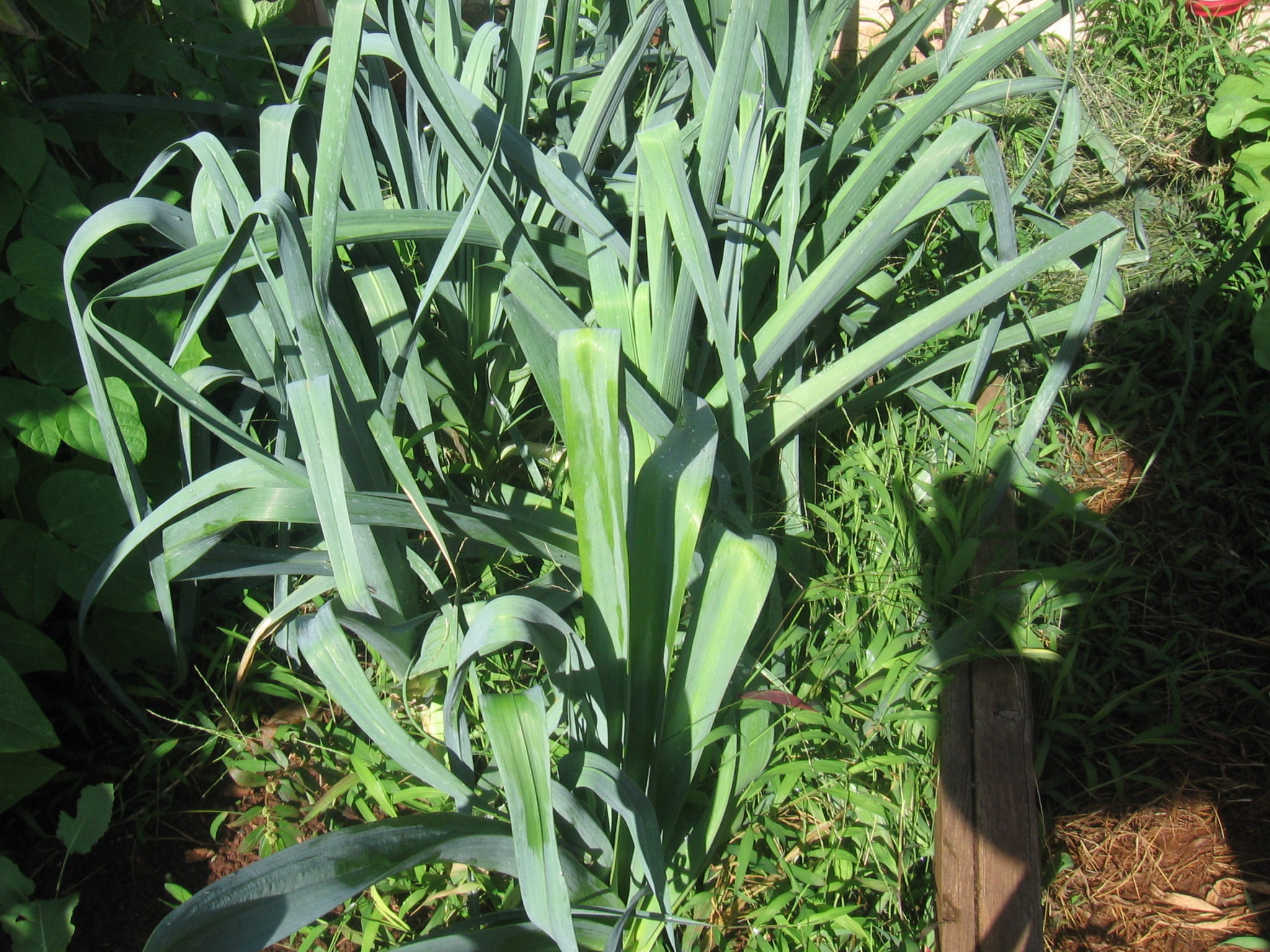
I like planting leeks in the garden. It is easy to grow from seeds. The garden bed needs to be amended with compost and maybe add a little horticultural sand for good drainage. You have to designate a place for them in the garden because they take long to mature to a marketable size. Besides you can leave them in the garden till you need them which is good for me. I always just pick what I needed for my cooking for the day so it works for me. The leaves of the leeks look good in the garden. The blue-gray leaves lend an ornamental look in the garden.

There is a type of leek they call Japanese leek. It is the bigger version of the scallions or spring onions. The leaves are hollow while the real leek is formed in sheaths like the leaves of amaryllis which incidentally is also related to leeks. You can blanched the leeks by hilling them or pushing the soil around them.

I always use leeks in making “nilaga”, a soup dish made of beef, preferably with bones, potatoes, and leafy green vegetables like bok choy/pechay, cabbage or napa cabbage. I also use “kinchay”/leaf celery in place of the regular celery. It can also be used in the dish we call “pochero” and the famous “bulalo”. These dishes are what you can call a one-course meal and is always served with steamed rice and patis/fish sauce or nampla as a dipping sauce except for “pochero” where the sauce is made of broiled and mashed eggplant with garlic and vinegar.

Similar Posts

  • Kohlrabi

    Kohlrabi is in the family of brassicas which includes cabbages, brocolli, cauliflower, kale, collard greens and brussel sprouts. The word kohlrabi is a German word meaning cabbage and turnip. I guess its because it look like a turnip but tastes like a cabbage. I decided to plant Kohlrabi because I was curious about the taste…

  • Kinchay

    Kinchay or Leaf Celery (Chinese Celery) is a very versatile herb that we use for everyday cooking in the Philippines. It has the flavor and aroma that we like to impart in our local dishes like pancit, chop suey and soups.

  • Kale

    The popularity of kale as a cancer-fighting vegetable made me decide to plant some. I started with seeds and the variety is called “Toscano”. It is a plain-leaf type. Some kales have curly leaves. Some are called ornamental kales because of their different colors and mostly used as decorative plant in the garden. I have…

  • Long Beans/Sitaw

    Long beans or sitaw as we call them is in the member of the family of legume except they are eaten as green pods unlike other beans like navy beans or azuki beans. They are also called yard long beans or asparagus beans. I remember eating these beans cooked as adobo. It taste good and…

  • Artichoke

    Artichoke is perennial vegetable that belongs to the thistle family of plants. The edible part of the plant is the bud before it opens into a flower. The immature florets in the center of the bud is called the “choke” but its not edible. You have to remove it from the base called the heart,…

  • Green Papaya

    Papayas are very common here in Hawaii but most of them are for eating as fruits. Meanwhile we use the green papaya as vegetable. It is a different variety of papaya not like the “Solo” or “Sunrise”. This type is more elongated in shape and actually bigger than the Hawaiian variety. Just like the Thai…